This anonymous contribution to The Feminine Archive reflects one woman’s lived experience of growing up without emotional safety and her journey toward breaking generational trauma. Shared with consent, it holds themes of emotional abuse, resilience, loss, and healing.
I grew up without emotional safety. When I was around eight years old, my mom locked me outside alone. I often slept under my bed or in my closet because those were the only places that felt remotely safe. And on top of the chaos, both my mom and my dad told me — more than once — that I should’ve been aborted. When you hear that as a child, it rewires you. You learn early: you’re not wanted, you’re not protected, and your existence is an inconvenience.
And it wasn’t just one parent.
Both my mom and dad were emotionally abusive in different ways. My mom used chaos, rage, pills, and suicidal threats as her weapons. My dad used coldness, distance, and emotional neglect. One swallowed the room with drama. The other disappeared emotionally and left me alone in the quiet.
My mom started weaponizing suicide when I was five or six years old. “If I die, it’ll be your fault.” “Maybe then you’ll care.” That was the emotional soundtrack of my childhood. I became the scapegoat — blamed, gaslit, and expected to hold her emotions together so she didn’t “break.”
Even my stepmom — the one adult who truly loved me, who I still adore — cringes when I tell her my oldest daughter is just like me. Not because she thinks anything is wrong with me, but because she remembers how much my sensitivity, passion, empathy, and strong opinions got punished in that household.
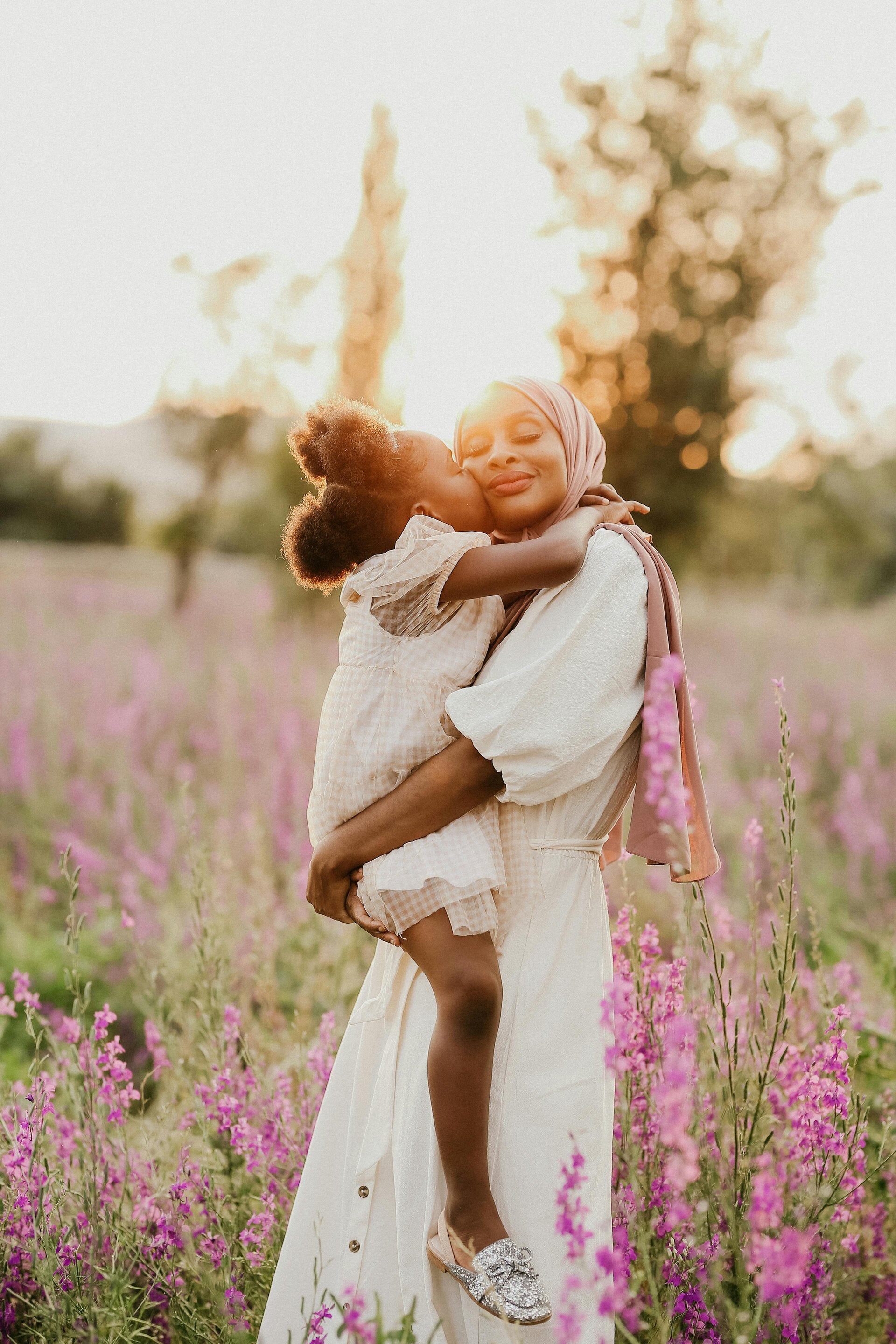
My daughter is everything I was — just without the punishment. She gets to be sensitive, brave, opinionated, full of empathy — in a home where those traits are safe and celebrated.
That contrast alone tells the entire story of what I survived.
As an adult, nothing with my mom improved. I was expected to call her every night, and those calls weren’t connection — they were emotional hostage situations. She’d talk about wanting to kill herself, knowing exactly what it did to me.
Then I had my first daughter.
I was three months postpartum — exhausted, sleep-deprived, overwhelmed — and my dad had been in and out of the ER for months. He died when I was four months postpartum. Complicated as he was, he was still my dad. Losing him broke something open in me.
This was all while carrying a new promotion I received literally the day before giving birth, so I was shouldering new responsibilities while drowning emotionally. No space to breathe. No one holding me. Just survival mode.
One night on my commute home from the Columbia Center in Seattle to my home Mukilteo, my mom began her usual suicidal script — the same lines I’d been hearing since kindergarten. And something inside me finally went still. For the first time in my life, I said to myself: I can’t do this anymore.
I ended the call in the gentlest, least alarming way — the only safe exit — and slowly faded out over the next few weeks. I needed to feel my own life.
A month later, my dad died. I scrambled to tell my brand-new boss that I had to fly back to the Midwest to arrange his funeral, because there was no one else who would. While I was there, my mom spiraled again, inserting herself into everything even though she’d been divorced from him since before I was conceived.
Back in Washington, during a work trip through central WA, my brother called to say she had nearly completed suicide and was hospitalized.
And the first thing I felt wasn’t guilt.
It was anger.
A deep, shaking anger. I went numb.
Because this wasn’t the first time.
Or the second.
Or even the third.
It was her third or fourth attempt that I could remember, and the gaslighting had only intensified as I pulled away.
I confirmed she was stable.
I ended the call.
I walked back inside.
And I delivered two more client presentations because that’s who trauma made me — the one who holds everything together, even while falling apart.
Only in my hotel room did I finally collapse. And in that collapse, the truth snapped into place:
This was never about me.
It was never love.
It was emotional abuse — from both of my parents — in different forms.
And underneath that clarity came something softer but unshakeable:
I was meant to be a present mother.
I was meant to show up for my children — not spend my life emotionally parenting the people who hurt me. My firstborn daughter is now eight — the same age I was when my mother locked me outside. I cannot imagine even entertaining that idea.
Where I stand now:
I am no-contact with my biological mother and with the brother who campaigned against me with her. I have limited contact with my oldest brother and even with my stepmom, who I still love, because I finally choose what protects my own peace.
And here is the truth:
I broke the cycle. AND I'm still healing.
My girls will never, ever live what I lived.
Not even close.
They will grow up safe, loved, held, heard, protected, and free.
And here’s what’s real:
I’m nowhere close to where I want to be —
but I am so much stronger and healthier than I ever thought I could become.
I built a life out of the wreckage I was handed.
And my daughters will never inherit the pain I did — only the healing.

Add comment
Comments